
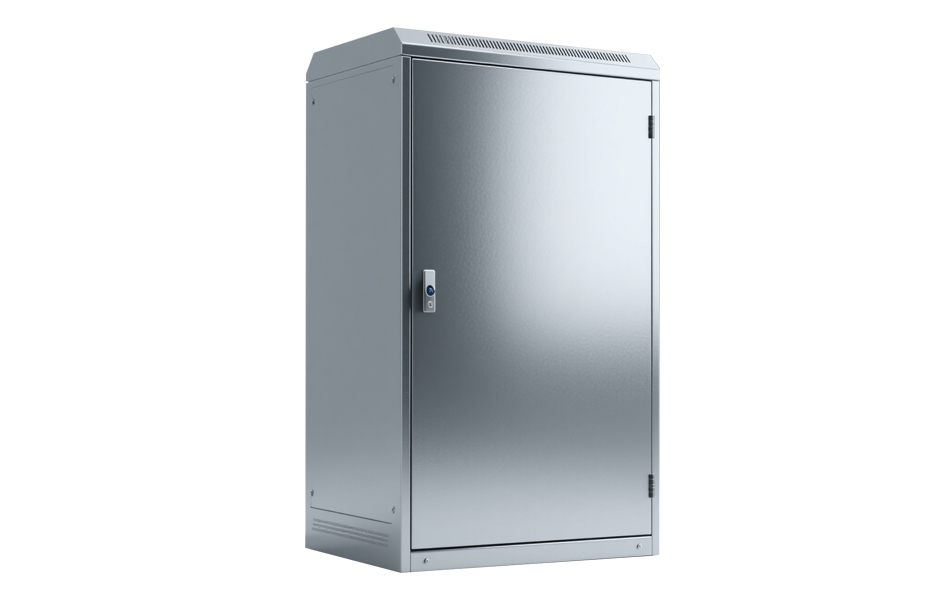
To specialize the division of labor and reduce production costs, general electrical control equipment manufacturers usually order cabinets from cabinet manufacturers. This presents the requirement of selecting standard cabinets.
Currently, the most widely used standard cabinets are 25 mm modular cabinets and 19-inch series cabinets. 25 mm modular cabinets are generally suitable for strong power fields, such as power and electrical control, while 482.6 mm (19-inch) series cabinets are mainly suitable for weak power fields, such as communications and computers.
1. Selection of cabinet brand
It is crucial to select a suitable cabinet. Any negligence may lead to significant losses. Regardless of the product brand, reliable quality should be the first consideration for users.
In recent years, the rapid growth of sheet metal chassis and cabinets in various industries has led to the proliferation of sheet metal enterprises, as well as an increase in standard cabinet brands and manufacturers. However, the manufacturing level, quality management level, and production capacity of these manufacturers vary. Many small, workshop-style enterprises have launched their own standard cabinet brands. These small companies’ products generally have hidden problems, such as uncontrolled material sources, inferior materials, rough workmanship, and insufficient design and structural strength. To ensure the quality of the computer room and reduce operational risk, it is generally advisable to select a higher-end cabinet brand.
The effective after-sales service and comprehensive equipment maintenance solutions provided by Anstorm can bring great convenience to users’ installation and maintenance. We promise that if there are technical problems with the cabinet within one year from the date of delivery, such as damaged parts, the manufacturer will be responsible for free repairs.
2. Selection of cabinet size
The selection of cabinet size requires listing the complete data and weight of all the equipment installed in the cabinet and the height, length, and width of the space they need to occupy. Calculate the required cabinet space (in U or 1.75 inches) according to the requirements, and also consider the space margin.
1) Selection of cabinet width
Standard cabinets, also known as 19-inch standard cabinets, are produced according to the IEC60297 standard size, and strictly ensure that the internal installation size meets the 19-inch requirements. Therefore, you don’t need to consider the width, and you can directly choose a 19-inch standard cabinet.
We don’t need to consider the width of equipment equipped with brackets because we design these devices according to the width of the cabinet. However,we cannot install cabinets and other equipment with brackets and we must consider their width
2) Selection of cabinet depth
When choosing the depth of the cabinet, we must fully consider the depth of the equipment we plan to install and take the size of the deepest equipment.On the basis of the deepest equipment size, add about 200mm as the reserved wiring space. The current mainstream 19-inch standard cabinet has four depths of 600mm, 800mm, 900mm, and 1000mm to choose from.
From a usability perspective, it is necessary to reserve a little more depth. There is also a lot of space in the back of the cabinet, which is why we must calculate the cabinet’s depth. If you choose a deeper cabinet, you can install two devices back-to-back inside it. This method allows you to install two rows of equipment in the cabinet. We load and unload one row from the front door and the other row from the back door. This allows you to install more equipment and increase the cabinet’s space utilization. To make full use of the cabinet’s depth, we can design the cabinet with an adjustable column depth.We can move the four columns freely forward and backward according to need and connect them with screws.This operation is simple, and we can adjust the installation position according to the actual depth of the equipment.
3) Selection of cabinet height
A high cabinet can fit more equipment and save space. The total height of the cabinet ultimately determines the number of devices we can install.
The height of the cabinet is generally expressed as “U.” “U” represents the external size of the server and is an abbreviation for “unit.”
One U equals 44.45 mm (1.75 inches), which is the international standard for cabinet size, as specified by the IEC 297 series standard. When choosing a cabinet’s height, we should plan and list all the equipment we will install and calculate its total height.
No one wants to fill the cabinet and then discover that we will soon need to install more equipment. Therefore, as a general rule, the cabinet height should be 20%-30% greater to allow for system expansion. These spaces can improve ventilation for the equipment.To ensure we fully utilize the space, we space three installation holes 15.875 mm apart at each U of the cabinet column, which enables more flexible equipment installation. For easy installation, we silk-screen each installation position on the cabinet column.
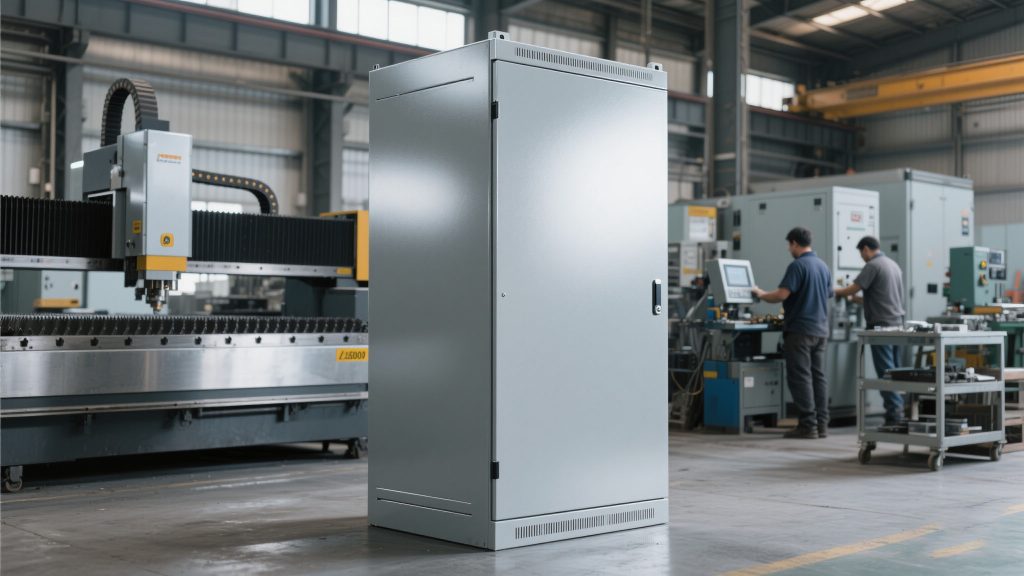
3. Cabinet appearance selection
1) Cabinet color selection:
The most popular colors for standard cabinets are black, white, and gray. The choice of surface treatment process and coating material also greatly impacts the cabinet’s appearance. Good craftsmanship and high-quality materials result in a delicate cabinet surface texture and uniform gloss. The color consistency of cabinets in the same batch is important for the cabinet’s grade. It is also important to choose cabinets of the same color for the same equipment space; otherwise, the machine room will look colorful and ugly.
2) Cabinet appearance selection
As industrial products, standard cabinets do not need to meet the appearance requirements of artwork. The main considerations are cleanliness, tidiness, and saving space. We design each cabinet’s appearance based on practicality to make the cabinet as simple and compact as possible.
4. Selection of cabinet wiring method
Standard cabinets offer two wiring methods: front and rear. These methods have slightly different internal wire management rings and outlets. During the initial planning stage, it is best to create a unified plan to prevent some cabinets from having front outlets and others having rear outlets. This uneven placement affects the overall beauty of the machine room. However, if our planning is not detailed enough, it doesn’t matter if there are both front and rear outlets. For some standard cabinets, we can interchange the front and rear doors, and the operation is very simple. Replacing them will not affect the overall appearance of the computer room.
5. Selecting cabinet load-bearing capacity and stability
As products are placed more densely in cabinets, good load-bearing capacity becomes a basic requirement for qualified cabinet products. Cabinets that do not meet specifications may not effectively or properly protect equipment due to poor quality, which may affect the entire system. If the total weight of the control equipment is relatively large, select a cabinet that can bear about 1,500 kg (3,300 lbs). In other words, select a sturdy cabinet with a good force-bearing structure. The weight of the equipment inside the cabinet determines whether the sliding rack is standard or weighted and also affects the selection of other accessories.
Since the cabinet is used to install expensive and fragile electrical components, the stability and load-bearing capacity of the cabinet must fully meet the requirements of the equipment and leave a margin. If the cabinet shakes or falls in the machine room, the losses and impacts caused will be dozens or hundreds of times greater than the cost of the cabinet itself.
6. Cabinet Heat Dissipation
Many electrical components are placed in a cabinet, which is equivalent to arranging multiple heat sources in a small space. Therefore, the control cabinet itself has very high heat dissipation requirements, so ventilation and heat dissipation inside the cabinet are important considerations when determining the cabinet model.
A good temperature control system is necessary inside the cabinet to prevent overheating or overcooling of the equipment and ensure its efficient operation. The cabinet can be equipped with a full ventilation series and a fan with a guaranteed lifespan. In hot environments, an independent air conditioning system can be installed. In cold environments, an independent heating and insulation system can be installed.
For general use, the standard cabinet relies mainly on the machine room air conditioner for cooling and heat dissipation to save costs. In this case, the cabinet’s ventilation characteristics are important. We usually install the cabinet’s cooling fan on top of the cabinet for ventilation and heat dissipation, providing a consistent temperature inside the cabinet. We hollow out the bottom of the cabinet to facilitate ventilation and heat dissipation.
7. Consideration of the convenience of equipment installation
We need to install the equipment in the cabinet and carry out operations within the cabinet’s relatively small range. Placing and wiring the equipment is relatively difficult. According to the traditional cabinet design, we can only open the front door to 90°, making it more difficult to install the equipment. However, if we design the structure so that we can open the front and rear doors to 130°, the installation process will be much easier. We can quickly disassemble and install the front and rear doors in one minute, meeting the various needs of equipment installation and wiring. We design the left and right side doors with buckles, allowing us to quickly disassemble and install them. When placing the cabinets side by side, we can consider canceling the side doors of the internal cabinet. This can increase the cabinet’s heat dissipation while reducing production costs.
The cabinet must have enough cable channels for cables to enter and exit from the top and bottom. Inside the cabinet, we should lay out the cables conveniently and orderly. We should position the cables close to the cable interface of the equipment to shorten the wiring distance, reduce the space that the cables occupy, and ensure that the wiring does not disturb the equipment during installation, adjustment, and maintenance. Additionally, the cables should not block the heat dissipation airflow. In the event of a fault, we can quickly locate the equipment wiring.
A fully functional cabinet should have various door locks and other features, such as dustproofing, waterproofing, electronic shielding, and high anti-interference performance. It should also have suitable accessories for installation to make wiring more convenient and easier to manage, saving time and effort.











