
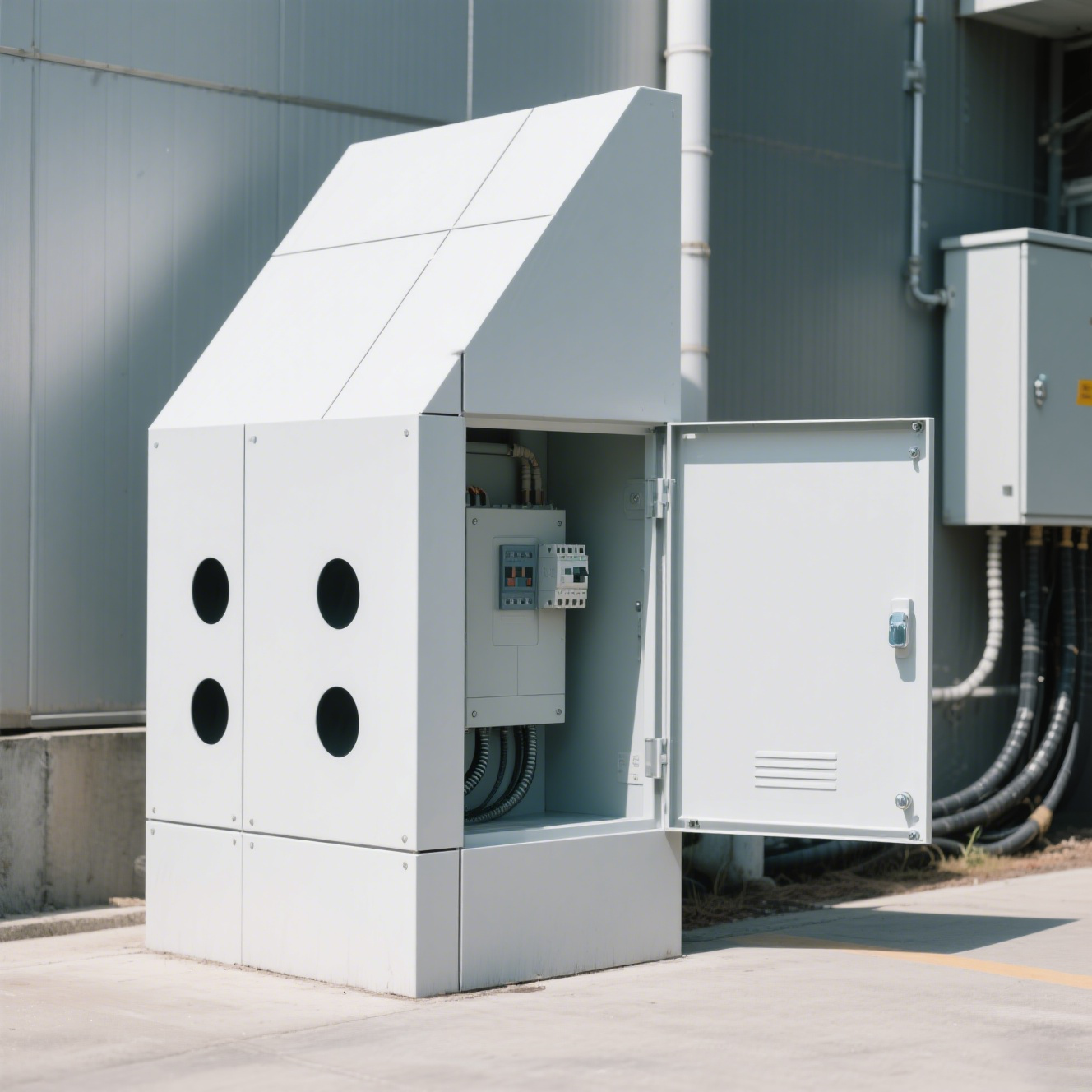
The machines used to make cabinet parts mainly include cutting machines, punching machines, bending machines, CNC punching machines, drilling machines, and welding tools. The sheet metal processing center for Industrial Enclosures and Custom Metal Electrical Enclosures goes through cutting, blanking, punching, and bending processes.
1. Basic Requirements for Cabinet Structure Parts
We design the cabinet so that connecting screws and the edges of sheet metal parts don’t show. Normally, we fold and wrap the nearby sheet metal parts inward to make them stronger and more water-resistant. When designing industrial enclosures, we use folded edges with sealing strips to block water and dust.
We also keep cabinet edges smooth and consistent, and make sure part connections look even and aligned. Ideally, we avoid putting joints along edges or curved surfaces. During welding, we place joints on areas like the top, bottom, or back—places not easy to see. We use bevel joints to make all edges smooth curves. Of course, the cabinet’s look and shape also affect how we design these metal parts.
2. Minimize the Number of Parts
We try to simplify cabinet parts as much as we can without affecting how the product works. This helps reduce the number of components and makes production easier. For instance, in a sheet metal cabinet, we once used eight different pad types to connect columns and frames—even though they looked and worked the same, their hole positions varied. Workers found them easy to mix up. By slightly adjusting the connection style, we simplified the pads down to two types—or even one. This efficiency is important for industrial enclosures.
3. Simplify Part Structures and Make Processing Easier
When designing parts, we not only meet performance needs but also aim to make them easy to manufacture. To do this, we follow these ideas:
- Keep surfaces simple
- Minimize the area to process
- Reduce how many times we clamp the part
- Reduce how many steps we need
Take the lifting block at the top of a control cabinet as an example. At first, we made it square with a threaded hole in the center. This needed three processing steps—milling, marking, clamping—and eight clamps. After changing it to a cylinder, we used just one turning step and one clamp. This boosted efficiency by 70%–80% and saved about 25% of the raw material.
4. Use Standard Sizes and Reasonable Tolerances
Standard sizes help us reduce how many tools and machines we need. They let us use the same process for many parts and keep things simple. As long as we meet the performance needs, we set tolerances and surface smoothness to the most cost-effective level. These are practices aligned with those used for industrial enclosures.
For example, we used different tolerance levels for the hole spacing on drawer partitions in the same cabinet:
- ±0.05mm holes: We drilled them with a coordinate milling machine
- ±0.10mm holes: We used a CNC milling machine
- ±0.15mm holes: We drilled them by hand
All versions passed testing. So, designers agreed to use the ±0.15mm tolerance and a drill jig for all holes. This saved money and improved efficiency.

5. Choose the Right Processing Method When Designing
When designing parts, we carefully consider current machines and processes to make sure we can manufacture them smoothly. For example, the left and right side panels of a standard display console required angled welding. But our WPTJ00/30 bending machine couldn’t bend the parts correctly because the 80° and 85° bends got in the way.
Adjustment plan:
- We extended the horizontal bar length by 2×(23.5–2)=43mm
- We added a 23mm gap on the side panel’s angled section
- We moved the weld point to keep the cabinet looking good after assembly, especially important for industrial applications.
6. Choose Materials That Fit the Process
(1) When we pick materials, we consider how easy they are to process:
Example 1: If normal radiator profiles don’t meet our needs, we pick custom aluminum profiles from the factory. These look good, require little processing, and cool well. If we use thick aluminum plates instead, we have to remove a lot of material—and the final part is just one-third of the original weight, which leads to bending and poor cooling. This consideration also applies when selecting materials for industrial enclosures.
Example 2: We clearly label cold-rolled and hot-rolled steel. If we pick the wrong one, it could ruin the part or waste material.
(2) Design rule for extra-wide cabinet back panels:
For cabinets wider than 1250mm, we design back panels as double doors instead of welding two plates. Even if the contract says otherwise, we must talk to the customer before making changes.
7. Notes on Cabinet Structure Design
- Don’t make parts thicker just to add strength. First, increase the size of folded edges. Then, if needed, add rib plates or J-shaped reinforcements to get better performance without extra weight.
- If a part can be bent in one piece, don’t split it into smaller parts to weld later. Always check if bending will work before deciding to split.
- Mark all holes on split parts—except matching holes—so we can cut them directly using CNC laser or turret punch machines. This helps avoid manual alignment later.
- Adjusting the design of a part can help save material. For example, rearranging how we cut a vertical panel with a CNC laser might take more time, but the material savings are worth the extra effort.
These methods help improve production efficiency, reduce cost, and ensure quality for Industrial Enclosures and Custom Metal Electrical Enclosures.











