
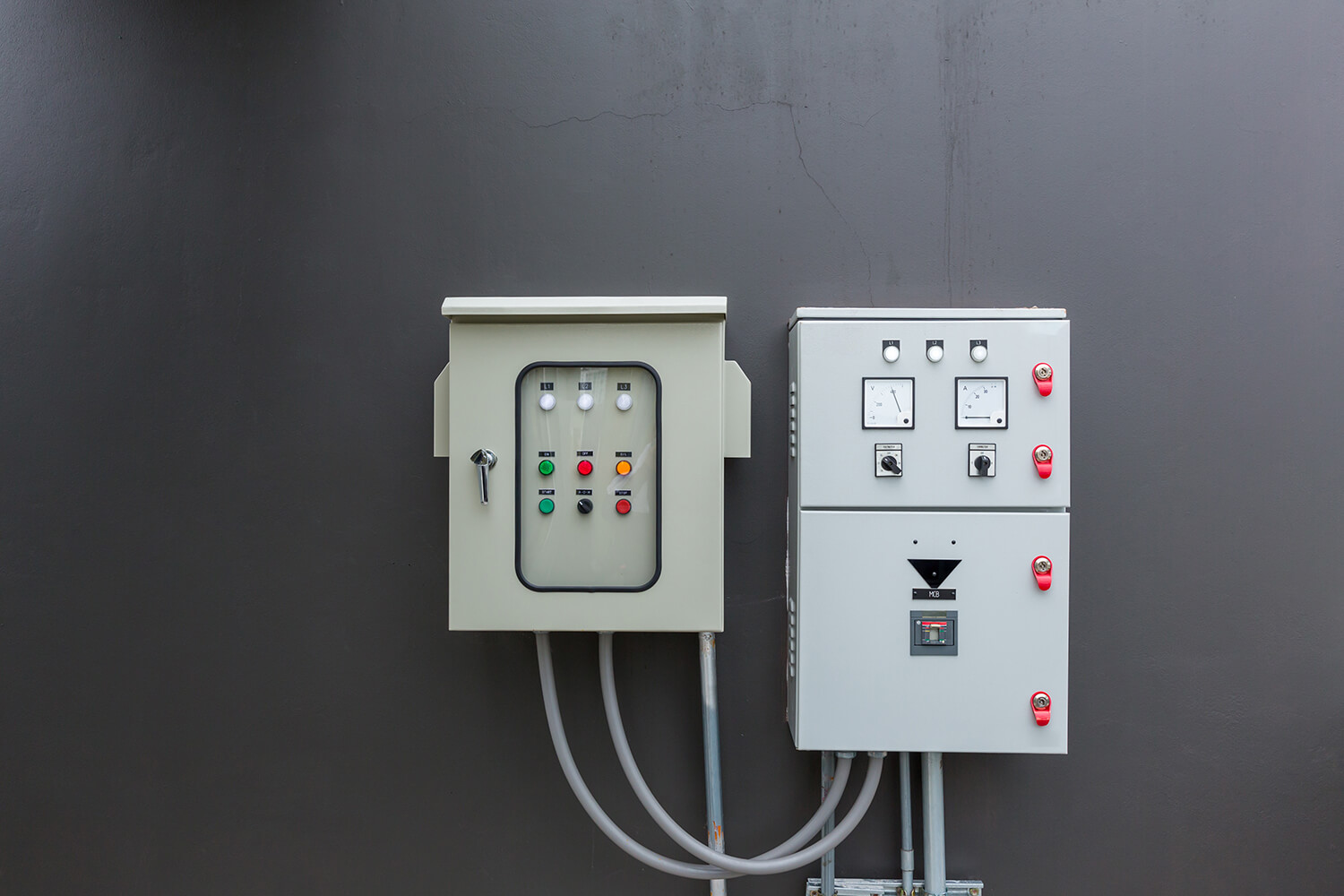
1. Operating Conditions:
1.1 Normal Operating Atmospheric Conditions:
- Environmental Temperature:
- Indoor: -10°C to 55°C
- Outdoor: -24°C to 55°C
- Relative Humidity: 5% to 95% (No condensation or freezing inside the cabinet)
- Atmospheric Pressure: 80-110 kPa
1.2 Storage and Transportation Conditions:
- The extreme temperature range for storage and transportation should be between -40°C and 70°C, with a relative humidity not exceeding 85%.
- For long-term storage, the environmental temperature should range from -10°C to 55°C.
1.3 Other Operational Conditions:
- The cabinet should not be exposed to explosive, corrosive, conductive, or insulating-damaging substances, nor should there be excessive mold growth.
- Mechanical vibration and impact should not exceed DL4 level or K2 level for collision.
1.4 Special Operating Conditions:
- Special operational conditions can be negotiated between the supplier and the customer and specified in the supply contract.
2. Types of Power Integrated Cabinets:
2.1 By Front Door Structure:
- Embedded Door: The cabinet’s front door is within the projection range of the cabinet’s main body.
- Outer-hanging (Covering) Door: The front door protrudes outside the cabinet’s main body dimensions.
- Regardless of the door style, the cabinet structure in the same project should strive for uniformity.
2.2 By Frame Assembly:
- Assembled Type
- Welded Type
- Hybrid Assembled and Welded Type
2.3 By Environment:
- Indoor Type
- Outdoor Type
3. Cabinet Dimensions and Geometrical Tolerances:
3.1 External and Installation Dimensions:
- The external and installation dimensions comply with general design standards for electrical cabinets. The front door is usually of the outer-hanging type. Specific dimensions are given in the table below. Refer to indoor and outdoor cabinet design standards for special cabinets, with dimensions confirmed through client consultation.

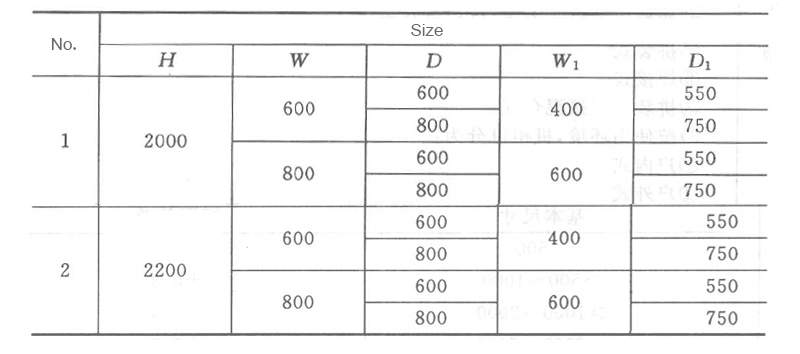
Note: Meaning of dimension symbols:
H—cabinet height (excluding the height of the additional upper eyebrow plate of 60mm);
W—cabinet width (excluding the thickness of the external side panels or side doors);
D—cabinet depth (excluding the thickness of the external door);
W1—center distance of the mounting holes in the width direction;
D1—center distance of the mounting holes in the depth direction.
3.2 Dimensions and tolerances:
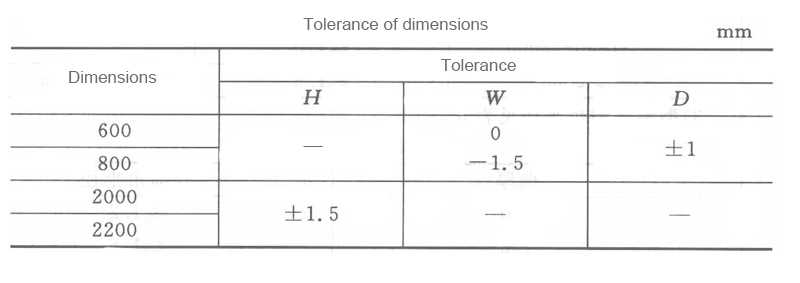
3.3 Dimensions and tolerances:
- Flatness Tolerance of the Cabinet’s Front Panel: No more than 1.5 mm per square meter.
- Verticality Tolerance in the Cabinet’s Height Direction: No more than 2 mm.
3.4 Cabinets’ Assembly and Front/Rear Door Lock Position Dimensions:
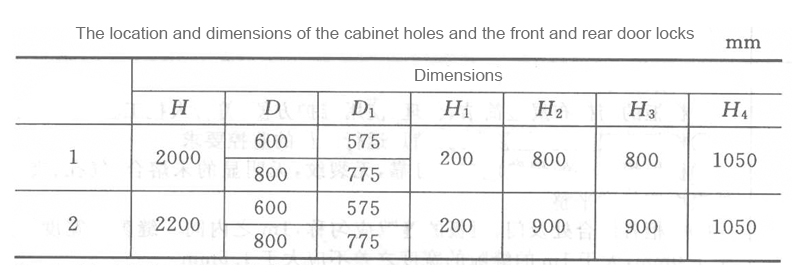
Note: 1. The hole size for cabinets is Φ6.5 or M6
2. The meaning of dimension symbols is as follows:
H1-H3: Position dimensions of cabinet cabinet holes;
H4: Position dimensions of cabinet door locks (based on the center of the door lock)
3.4 Dimensions for Installing 482.6mm (19-inch) Systems:
- The cabinet must provide the required space for installing standard 19-inch units such as racks, drawers, and panels.
4. Steel Profile Requirements:
4.1 Linear Dimensional Tolerances for Steel Profiles:
- Detailed dimensions for tolerances related to the steel profile structures used in the cabinet frame.
| Limit deviations of linear dimensions of steel sections | |
| Basic dimensions | Limit deviations |
| ≤500 >500~1000 >1000~2000 >2000~2400 | ±0.2 ±0.3 ±0.4 ±0.8 |
4.2 Straightness and Flatness Tolerances:
- These tolerances ensure the steel profiles’ alignment meets the required structural standards.
| Limit deviations of straightness and flatness of steel sections | ||
| Basic dimensions(mm) | Straightness (mm) | Flatness (mm/㎡) |
| ≤500 >500-1000 | ≤0.4 ≤0.5 | ≤1.0 |
| >l000-1500 | ≤0.8 | |
| >1500-2000 | ≤1.0 | |
| >2000 | ≤1.5 | ≤1.5 |
4.3 Steel fillet radius:
| Radius of outer fillet of steel sections | |
| Thickness | Radius of outer fillet |
| 1 | ≤1.2 |
| 1.2 | ≤1.5 |
| 1.5 | ≤2.0 |
| 2 | ≤2.5 |
4.4 Steel Profile Modulus Holes:
- For steel profiles, any modulus hole should not exceed a tolerance of ±0.4mm within a 1-meter distance.
5. Structural and Aesthetic Requirements:
5.1 General Structural Requirements:
- The cabinet layout must be simple, rational, and ergonomic, ensuring ease of use and maintenance.
- The cabinet should have an attractive design with a coordinated color scheme, meeting operational personnel’s visual and functional needs.
- Welds in all welded components should be firm and free of cracks, voids, or any welding defects.
- All cabinet connections and door seams should be uniform in size, with no significant discrepancies within 1m.
- Fasteners and detachable parts must be secure, with anti-loosening measures in place.
5.2 Electrical and Conductive Parts:
- Copper should be used for parts that function as both connectors and conductors (except for those in protection circuits).
- Reliable adhesive connections are required to avoid any part detachment or failure.
5.3 Door and Lock Requirements:
- Cabinet doors should open and close smoothly, with a minimum angle of 120°, and be securely locked.
- Multi-point locking systems are required for additional safety.
- The lock protection grade should be at least equal to the protection level of the cabinet.
6. Surface Coating and Protection Requirements:
6.1 Surface Finish:
- All fasteners should have a corrosion-resistant coating, ensuring a clean and smooth surface without defects such as cracks or chips.
- The cabinet’s frame, side panels, and doors must have a durable and uniform protective coating.
- The coating should be free from impurities, bubbles, scratches, and other imperfections, ensuring long-term protection against weathering.
6.2 Outdoor Cabinets:
- Outdoor cabinets must have excellent sun and weather resistance to withstand exposure to harsh elements.
7. Configuration Requirements:
7.1 Fire and Safety:
- Fire-resistant partitions should be added between cabinets when required for fire protection.
- The upper part of the cabinet should have provisions for lifting.
7.2 Cable and Wiring:
- The bottom of the cabinet should provide cable entry holes with seals, and the internal wiring should be well-organized.
7.3 Thermal and Ventilation Equipment:
- Fans, air conditioners, and heaters may be added based on specific temperature and humidity control needs inside the cabinet.
8. Electromagnetic Shielding Requirements:
8.1 EMC Design:
- The cabinet structure should ensure electromagnetic compatibility (EMC) through shielding, grounding, and static discharge protection.
- Exposed conductive parts should be reliably interconnected and grounded, ensuring an electrical resistance of no more than 0.1Ω.
8.2 Shielding Materials:
- Gaps and cable entry points should be sealed with electromagnetic shielding materials (e.g., conductive rubber, conductive foam).
9. Safety Requirements:
9.1 Protection Against Electric Shock:
- All exposed conductive parts must be interconnected to ensure electrical continuity, with a dedicated protective ground.
- The resistance between exposed conductive parts and the ground should not exceed 0.1Ω.
9.2 Fire Protection:
- The cabinets should minimize damage from flame, molten materials, or hot particles in the event of a fault.
- Fire-resistant barriers and screens should be used to prevent spreading.
9.3 Mechanical Safety:
- All accessible parts should be smooth and free from sharp edges or rough surfaces to avoid injury.
- Moving parts should have safety guards to prevent harm.
9.4 Outdoor Cabinets:
- Outdoor cabinets must have reliable locking mechanisms to prevent unauthorized access.
9.5 Safety Labels and Warnings:
- Safety labels should indicate relevant electrical hazards, grounding information, and other warnings to ensure safe operation and installation.











