
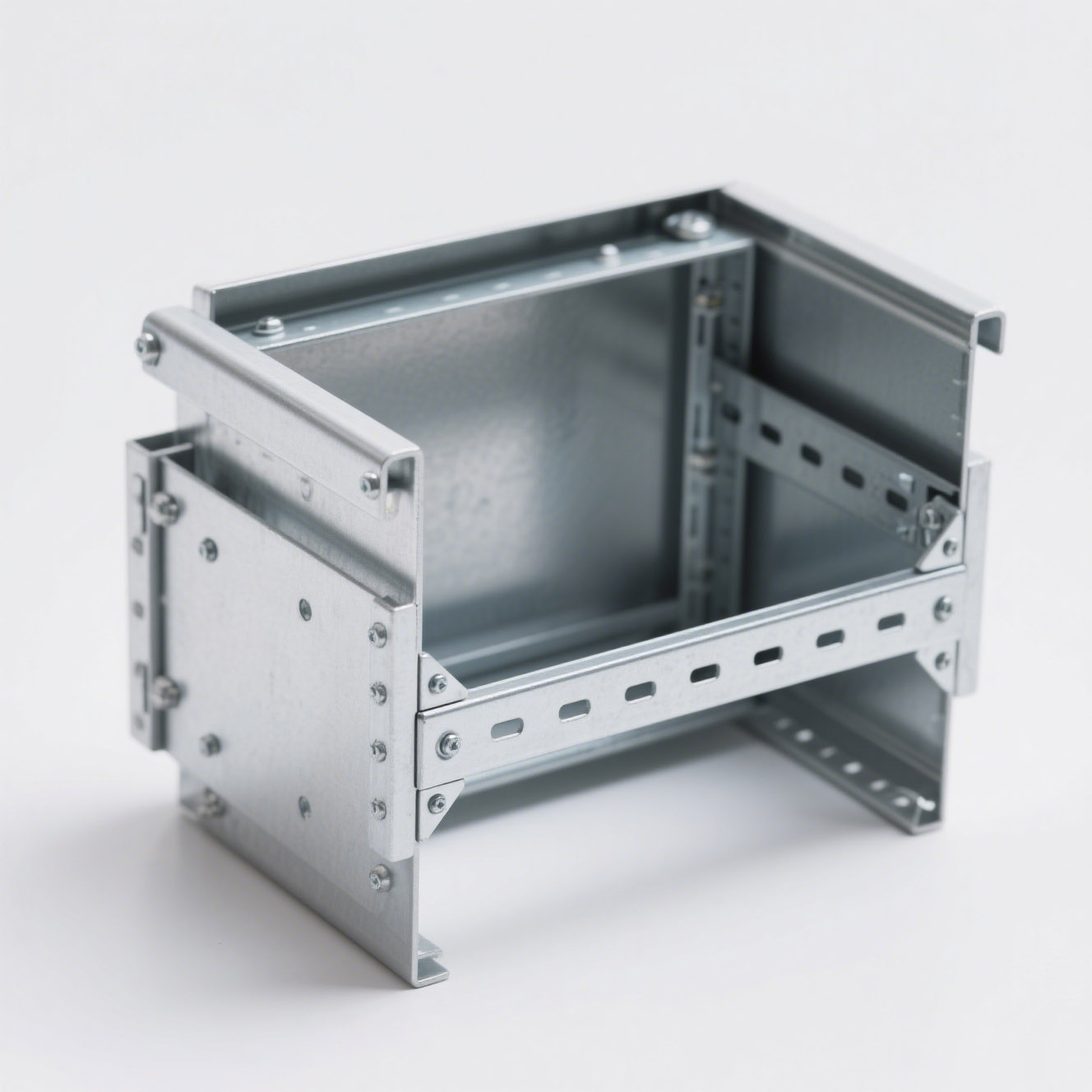
Types of Cabinet Structures:
Electrical cabinets generally fall into two categories based on structure: fixed cabinets and withdrawable (drawer-type) cabinets. Understanding the mechanical design of cabinet is essential for choosing the right structure for specific needs. Fixed cabinets house all components in fixed positions and do not allow individual removal. In contrast, withdrawable cabinets feature pull-out function units (drawers), which make maintenance and replacement easier. Each structure has its advantages: fixed cabinets are simple and low-cost but require a complete power shutdown during repairs; withdrawable cabinets allow technicians to pull out faulty units for maintenance without cutting power, improving system availability. Additionally, cabinets can be wall-mounted or floor-standing. Wall-mounted cabinets are compact and save floor space, making them ideal for residential, commercial, or small factory settings. Floor-standing cabinets are taller and more stable, suitable for complex systems and commonly used in large facilities.
Material Selection:
The material of the cabinet directly affects its strength, durability, and environmental adaptability. Mechanical design of cabinet requires an understanding of material properties. Metal materials are the primary choice, including carbon steel, galvanized steel, stainless steel, and aluminum alloy. Carbon steel offers high strength and low cost but requires anti-corrosion treatment. Galvanized and stainless steel resist corrosion well and suit humid or chemically aggressive environments. Aluminum is lightweight and corrosion-resistant, often used outdoors or where weight is a concern. Non-metallic materials, like engineering plastics (polycarbonate) and fiberglass-reinforced plastic (FRP), are also increasingly used. They are lightweight, non-conductive, and corrosion-resistant, making them ideal for small control boxes or areas needing electromagnetic transparency. Engineers must choose materials based on equipment weight, shock resistance, heat dissipation, and electromagnetic shielding. For instance, metal is preferred for high-impact or EMI-shielding needs, while plastic or composite materials are better suited for lightweight, rust-resistant control units.
Mechanical Strength and Stability:
Cabinets must provide sufficient mechanical strength to support internal devices and resist external forces. The mechanical design of cabinet must ensure stability under load. Most cabinets consist of a frame and panels, which should remain rigid and stable under load. For large floor-standing cabinets, designers usually include base mounts or leveling feet to increase stability and simplify installation. Cabinets must pass mechanical testing, such as static load, vibration, and impact tests, to verify their strength and shock resistance. Some industrial cabinets undergo finite element analysis and earthquake simulations to ensure structural integrity and reliable electrical connections under extreme conditions. Cabinets designed for mobility or lifting should also include lifting rings or forklift slots to ensure safe handling.
Modularity and Expandability:
Modern cabinet designs emphasize modularity to enhance flexibility and scalability. A well-executed mechanical design of cabinet generally incorporates modular aspects to improve usability. Modular cabinets use standard-sized frames, vertical supports, and panels, which can be extended in height, width, or depth as needed. Many cabinets use assembled structures connected by bolts rather than welded frames, making them easier to assemble on-site and expand later. Internally, modular designs include DIN rails, mounting plates, and dividers to support various electrical devices and subassemblies. These structures usually follow standard modular sizes to simplify installation and upgrades. For example, PLCs, relays, and terminal blocks often mount neatly on DIN rails, allowing organized layouts and easy expansion. In applications that frequently require configuration changes, assembled cabinets offer clear advantages over welded ones, as users can disassemble and reconfigure the structure or add extra cabinets as needed.
Machining and Manufacturing Processes:
Cabinet manufacturing involves multiple machining processes to ensure accuracy and quality. Common steps include:
- Shearing and Punching: Cutting steel sheets to size and creating holes (e.g., for wiring and mounting).
- Bending and Forming: Using press brakes to shape flat sheets into cabinet side panels, tops, and bottoms.
- Welding or Riveting: Connecting structural parts into a complete frame; welding must ensure strong joints with minimal distortion, while rivets are used where disassembly is needed.
- Surface Finishing: After forming, surfaces undergo rust removal and phosphating, followed by powder coating or painting to improve corrosion resistance and appearance. Stainless steel cabinets may receive polishing or brushed finishes.
Modern production relies on CNC machining, including CNC punching and bending machines, and laser cutting for high-precision parts. During assembly, manufacturers use hardware such as hinges, locks, and clips, often made from corrosion-resistant materials to ensure long-term reliability and structural compatibility.
Anstorm
Related articles:
Mechanical Strength Requirements for Control Cabinet Structures











