
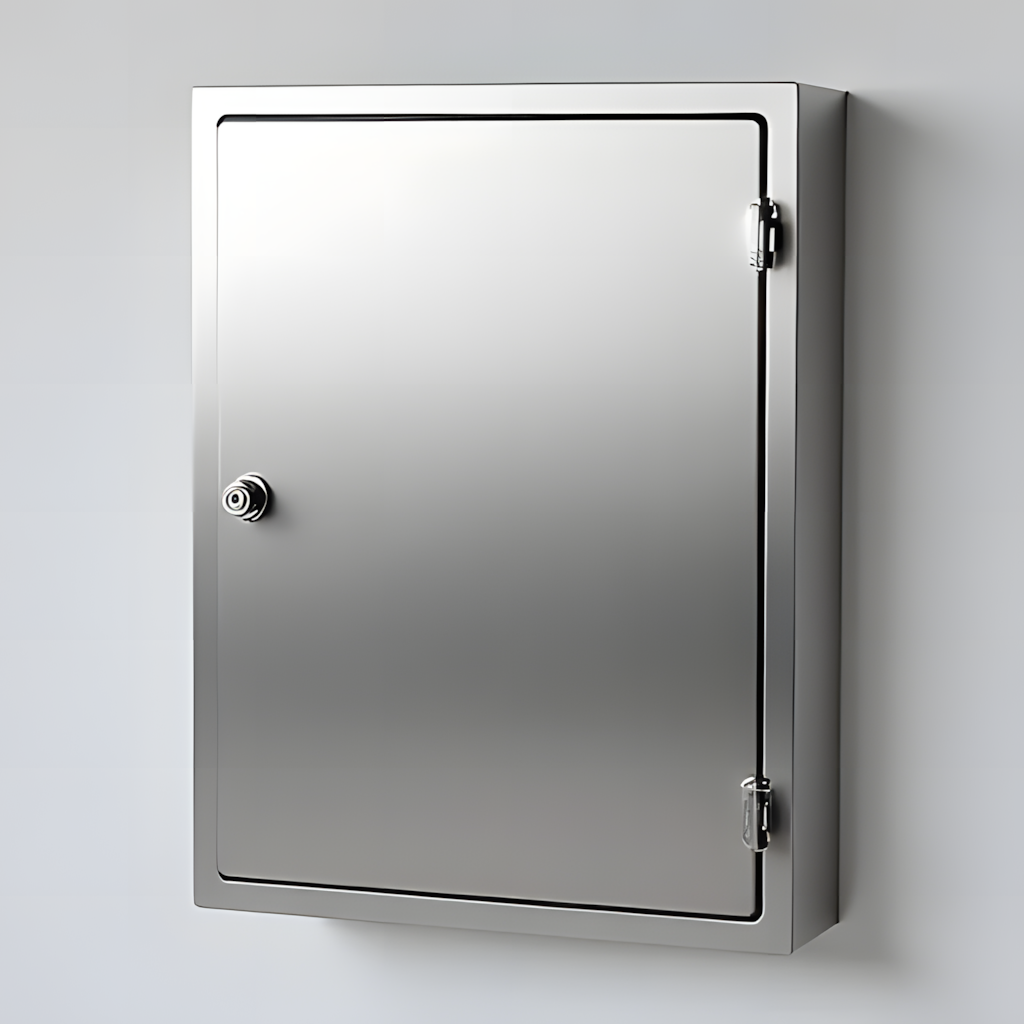
Using cabinet protection is a safety measure. We must set levels to stop objects, electric shock, and water based on how the equipment is used. These measures are important to keep people safe. Rotating, swinging, and moving parts of control equipment should be hard to reach or touch.
(1) Following IEC 60529, we use “IP” to show how well control equipment stops people from touching live parts, keeps out solids, and blocks liquids. Control cabinets must keep out outside solids and liquids. Their shells usually need at least IP54 protection.
For indoor control equipment with no water protection needs, good choices are: IP00, IP2X, IP3X, IP4X, IP5X.
(2) When we install closed control equipment as the manufacturer says, it should have at least IP2X protection. Exceptions:
① Use a shell in the electrical work area to protect against solids and liquids.
② When using movable collectors in bus systems, if it doesn’t reach IP22, use barriers for protection.
Examples of use and typical protection levels:
- Ventilated cabinets with only motor start resistors and large equipment: IP10.
- Ventilated cabinets with other equipment: IP32.
- Regular industrial cabinets: IP32, IP43, IP54.
- Cabinets in low-voltage washing areas (hose-washed): IP55; cabinets against fine dust: IP65.
- Cabinets with collector rings: IP2X.
We can use other suitable levels based on installation conditions.
(3) Outdoor control equipment without extra protection needs a second number of at least 3. Extra protection for outdoor equipment can be sheds or similar.
(4) Unless stated otherwise, when installed according to the manufacturer, their protection level applies to the whole control equipment. For example, we can close open installation surfaces if needed. When authorized people need to access internal parts, the manufacturer must also say how well it stops direct contact. Additionally, it must keep out solids and block water.
(5) For control equipment with movable or removable parts:
- The protection level for the whole set usually applies to where movable/removable parts connect. The manufacturer must say the level at other positions and when moving between positions.
- Cabinets with removable parts can be designed to keep the same protection level. This applies when in test, disconnected, or moving positions, just like when connected.
- If removing movable/removable parts makes the cabinet lose its protection level, manufacturers and users may need an agreement to fix this. The manufacturer’s product catalog can help with this.
(6) If part of the control equipment (like the work surface) has a different protection level than the main body, the manufacturer must mark this separately (e.g., IP00 – work surface IP20).
(7) For PTTA, we can’t give an IP rating unless we test it to IEC 60529. Another option is to use pre-tested, pre-made shells.
Common Cabinet Protection Levels
Table 2.2.7 shows common protection levels for cabinets.
| Protection Level IP (First Number and Extra Letter) | Second Number Protection Level | 0 | 1 | 2 | 3 | 4 | 5 | 6 | 7 | 8 |
|---|---|---|---|---|---|---|---|---|---|---|
| 0 | IP00 | |||||||||
| 1 | IP10 | IP11 | IP12 | |||||||
| 2L | IP2L0 | IP2L1 | IP2L2 | IP2L3 | ||||||
| 3 | IP30 | IP31 | IP32 | IP33 | IP34 | |||||
| 3L | IP3L0 | IP3L1 | IP3L2 | IP3L3 | ||||||
| 4 | IP40 | IP41 | IP42 | IP43 | IP44 | |||||
| 4L | IP4L0 | IP4L1 | IP4L2 | IP4L3 | ||||||
| 5 | IP50 | IP54 | IP55 | |||||||
| 6 | IP60 | IP65 | IP66 | IP67 | IP68 |











